
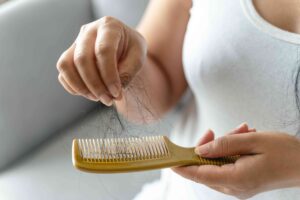
If you've been taking Ozempic, Wegovy, Mounjaro, or a similar GLP-1 medication and noticed more hair in your brush lately, you're not imagining it, and you're not alone. A large study published in The BMJ in July 2026 found that adults with type 2 diabetes using GLP-1 medications had a higher rate of hair loss diagnoses compared with those taking certain other diabetes medications. Here's what the research actually says, and what our team recommends if you're navigating this.
What the Research Found
The study analyzed thousands of adults with type 2 diabetes, comparing those taking GLP-1 medications with those taking two other common diabetes drug classes. GLP-1 users were diagnosed with hair loss more often, with the increased risk showing up mainly as a temporary, non-scarring type of shedding rather than permanent follicle damage. It's worth putting the numbers in perspective: even with the increased relative risk, the absolute numbers were still small, around seven per thousand GLP-1 users annually being diagnosed with hair loss, compared to four to five per thousand on the comparison medications. This was also a study specifically in people with type 2 diabetes, so it's not yet clear whether the same pattern holds for the much larger group now using these medications for weight loss alone.
Why This Might Be Happening
Researchers and dermatologists point to a few likely contributing factors rather than a single direct cause:
- Rapid weight loss itself. Significant, fast weight loss of almost any kind, whether from a GLP-1 medication, surgery, or another method, is a known trigger for a type of shedding called telogen effluvium, where more hair follicles than usual shift into a resting phase at the same time.
- Reduced calorie and nutrient intake. GLP-1 medications significantly suppress appetite, and lower food intake can lead to deficiencies in nutrients hair follicles depend on, including protein, iron, zinc, and biotin.
-
Changes in eating patterns. GLP-1 medications slow gastric emptying and suppress appetite, which can make it harder for some people to consistently meet their calorie, protein, and nutrient needs.
The encouraging part: when the shedding is related to telogen effluvium from rapid weight loss or nutritional changes, it is generally temporary and tends to improve once the underlying trigger is addressed.
Signs to Watch For
- Increased shedding that started a few months after beginning the medication
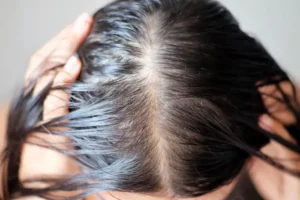
- Diffuse thinning spread across the scalp, rather than patches or a receding hairline
- Hair that feels thinner overall rather than falling out in defined areas
If you're noticing shedding that follows this general pattern, it's worth mentioning to your prescribing doctor, both to confirm what's going on and to rule out other contributing causes.
What You Can Do
Talk to your doctor first. Since this connects directly to a medication and, often, rapid weight change, your physician is the right starting point, especially to review your nutritional intake and rule out other causes like thyroid changes, which can also affect hair.
Prioritize protein and key micronutrients. With appetite significantly reduced, it's easy to under-eat protein specifically, which hair follicles rely on. Many clinicians recommend paying close attention to protein intake along with iron, zinc, and biotin levels while on these medications.
Be patient with the timeline. Telogen effluvium typically resolves within several months once the underlying trigger, in this case often the pace of weight loss and nutrient intake, is addressed.
Support your scalp environment. While a scalp treatment can't reverse a nutrient deficiency or change how a medication affects your body, keeping the scalp clean, well-circulated, and free of buildup creates the best possible conditions for hair to recover once the underlying issue is managed.
Where Professional Scalp Care Fits In
We want to be clear about scope here: a Head Spa treatment isn't a treatment for medication-related hair loss, and it won't replace a conversation with your doctor about your GLP-1 prescription or your nutrition. What it can do is support a healthy scalp environment, through cleansing, circulation, and hydration, while your body adjusts and your doctor helps address the underlying cause. For many clients navigating this, a scalp analysis is a helpful complement to medical care, not a substitute for it.
Frequently Asked Questions
Is hair loss from Ozempic permanent?
Current research suggests that GLP-1-associated hair loss is more commonly non-scarring. When shedding is related to telogen effluvium from rapid weight loss or nutritional changes, it is often temporary and may improve once weight stabilizes and the underlying trigger is addressed. Everyone's situation is different, so it's worth discussing your specific case with your doctor.
How soon after starting a GLP-1 medication does hair loss start?
Reports and research suggest shedding often begins around three to four months after starting the medication, which lines up with typical timelines for telogen effluvium triggered by rapid weight change.
Should I stop taking my GLP-1 medication if I notice hair loss?
That's a decision to make with your prescribing doctor, not something to decide based on general information. They can weigh the benefits of your treatment against this side effect and adjust your nutrition plan or medication approach if needed.
References
Tang, H. et al. Risk of alopecia associated with GLP-1 receptor agonists compared with other glucose-lowering drugs in adults with type 2 diabetes. BMJ. 2026.
Hair Culture Day Spa
Hair Culture Day Spa is a luxury salon and head spa in Pembroke Pines, Florida, serving clients throughout Broward County, including Weston, Davie, Miramar, and Southwest Ranches.
If you're navigating hair changes while on a GLP-1 medication, a scalp analysis can be a helpful complement to your doctor's care.
Call us at 954-362-4027 Text us at 754-226-9934